E : school@wallacehigh.org
Senior Prize Day 2026

The Wallace Rocketry Club made history during the 2025–2026 school year, its inaugural season, as it brought together students eager to explore the science and excitement of rocketry. In its very first year, the club provided a new and inspiring extracurricular opportunity, sparking curiosity, teamwork, and innovation among its founding members.
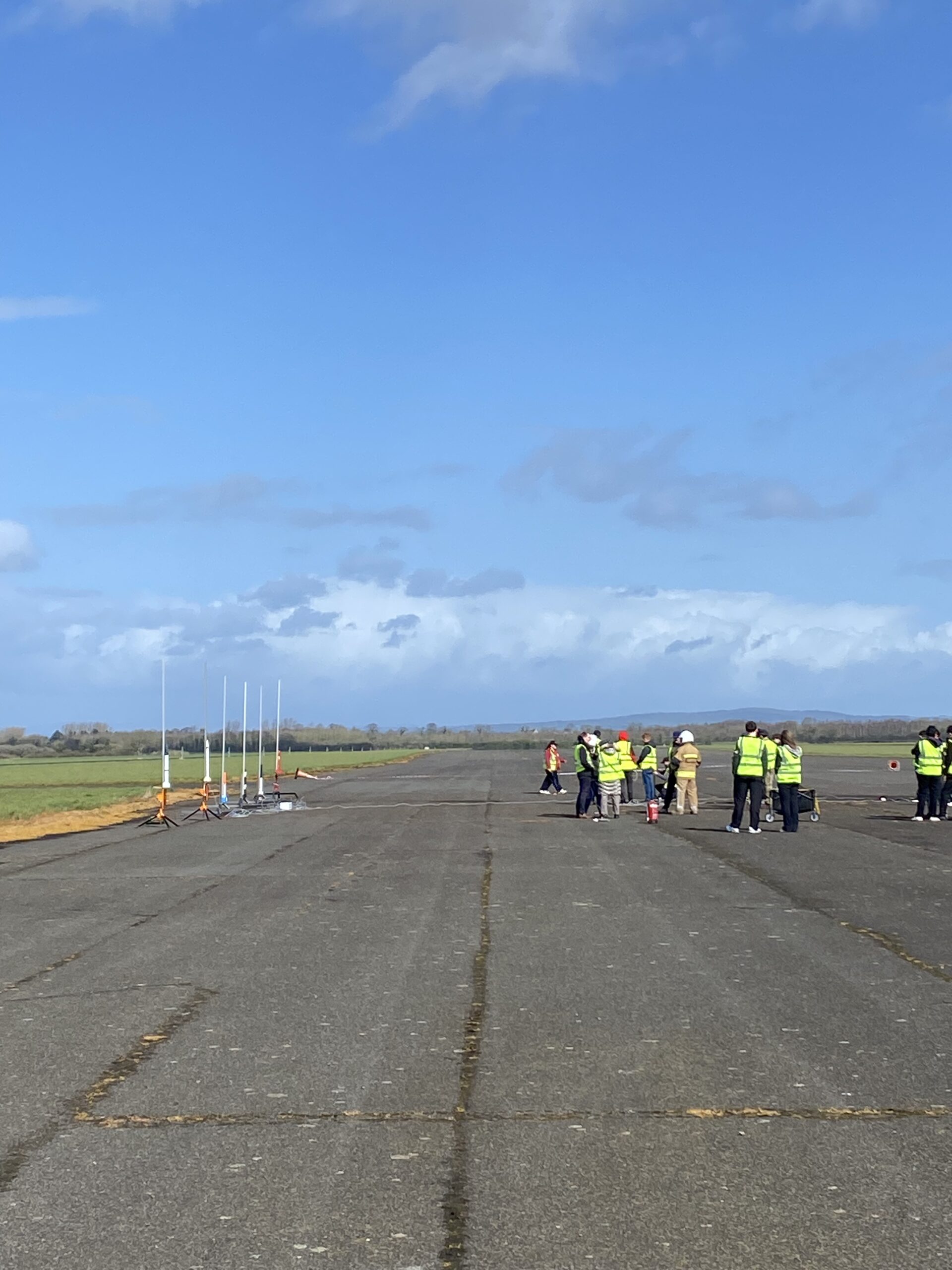
At the start of April, the first-ever UKROC (UK Youth Rocketry Challenge) team from The Wallace High School placed their precious rocket—complete with its fragile raw egg cargo—onto the launch pad near Lough Neagh. Having had only a single prior test flight, this was the high-stakes Northern Ireland Regional Final, and the pressure was firmly on.
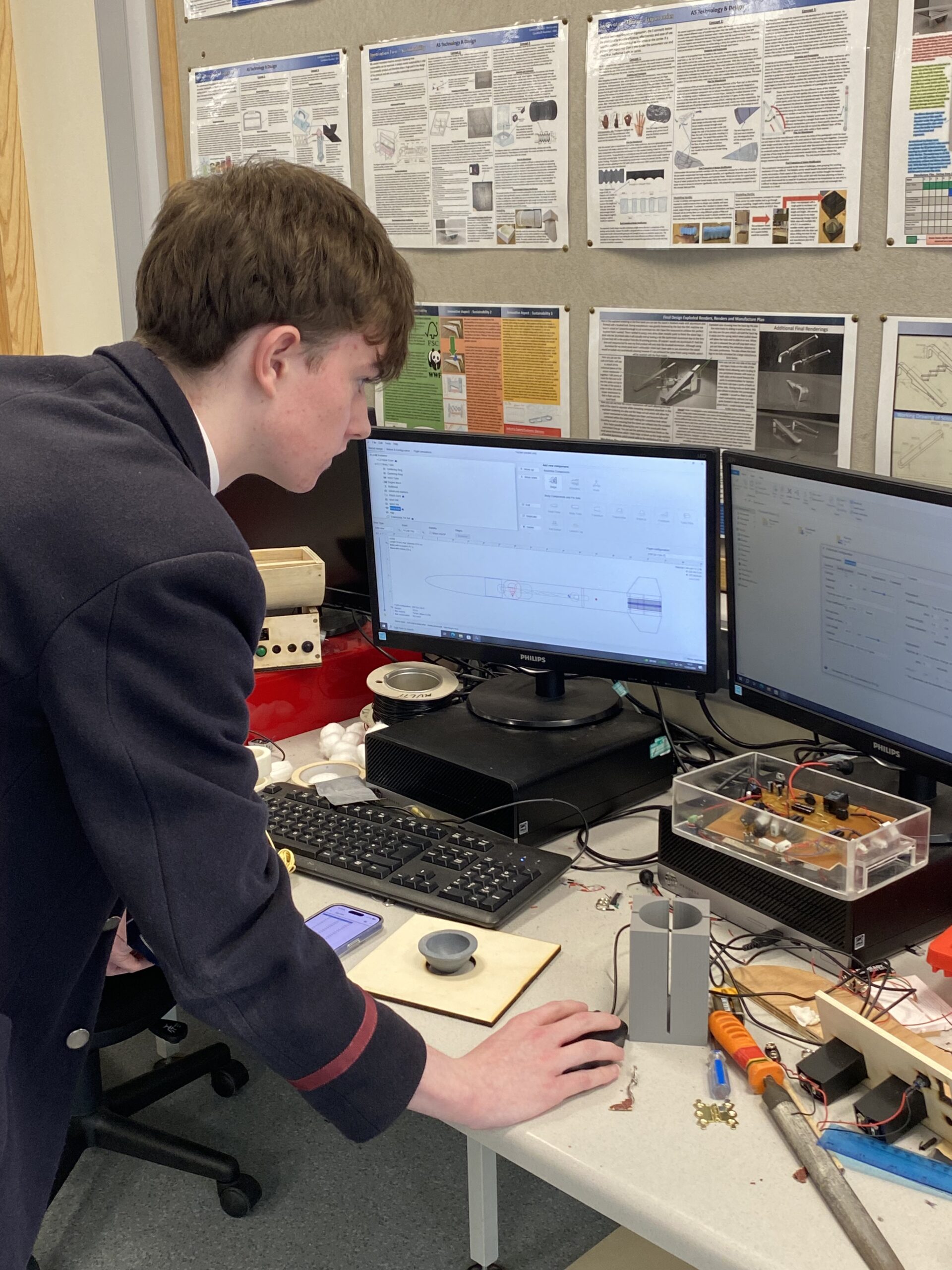
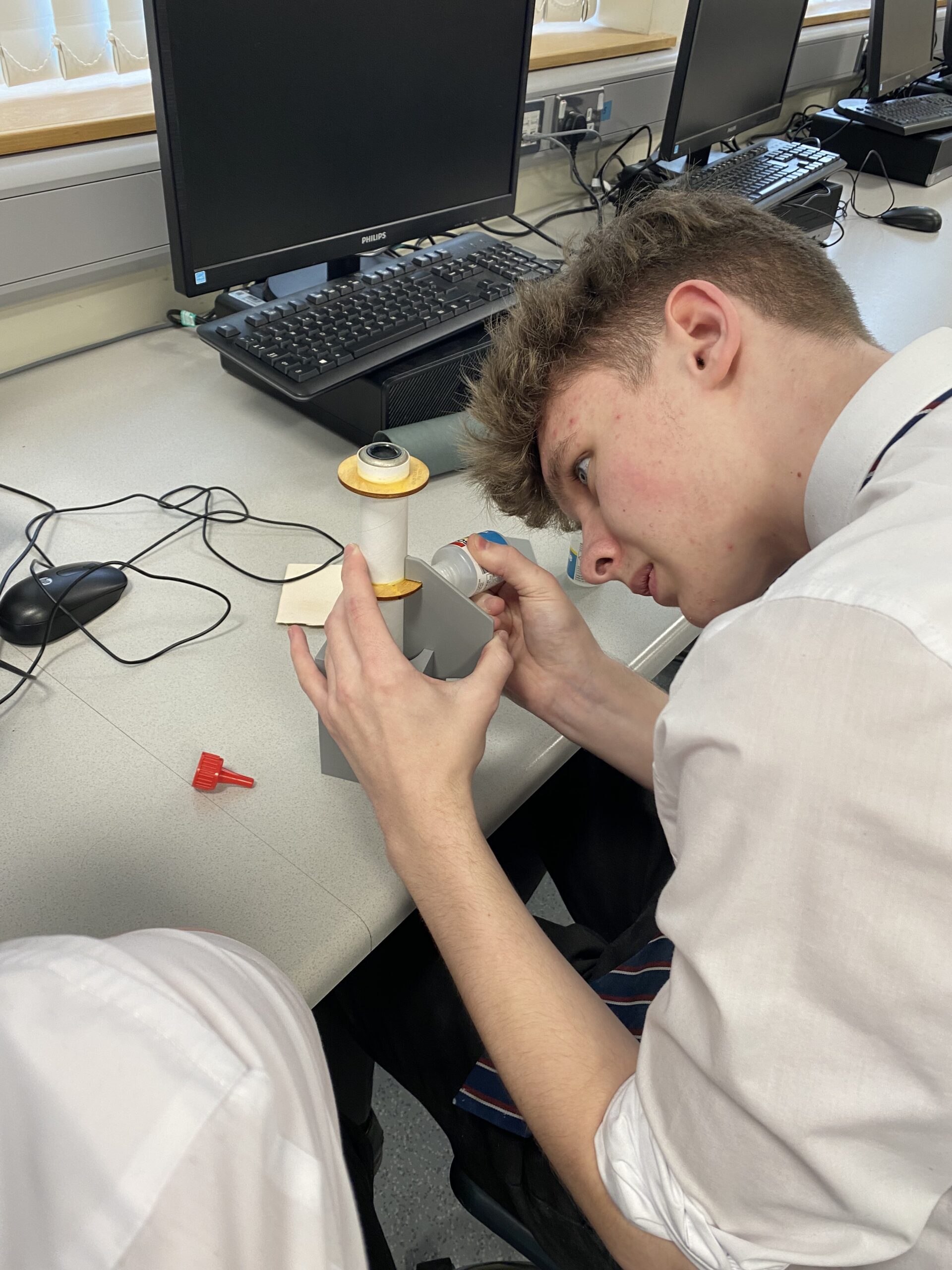
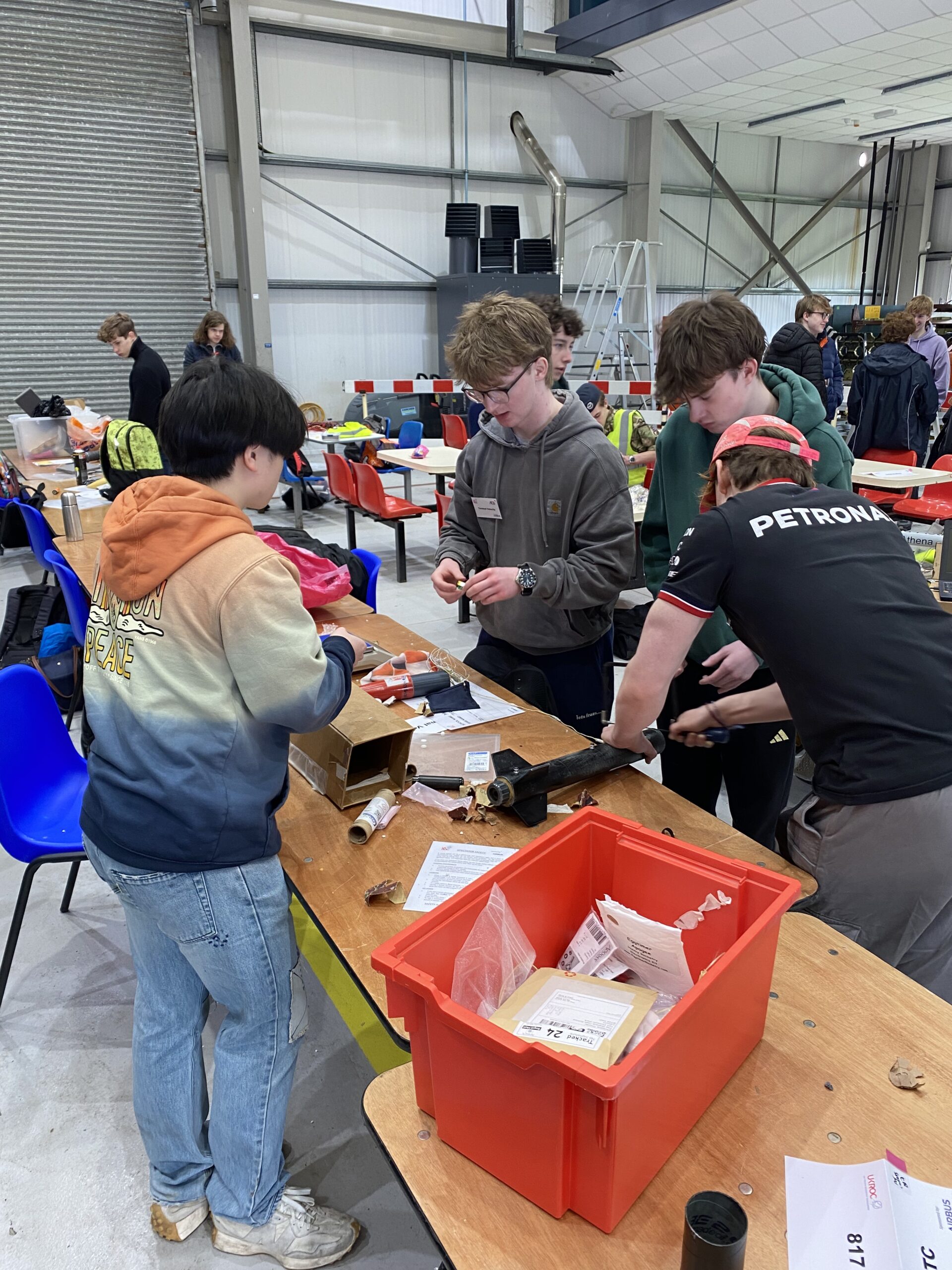
The dedicated team of Dan, Lewis, Josh, Josh, Matthew and Luke designed and built their rocket to incredibly tight competition criteria. Every single gram and millimetre mattered: they had to match strict weight, length and motor specifications to reach a precise target altitude of 229 metres, with a flight time of exactly 39 seconds. To top it off, they had to safely recover the raw egg completely uncracked from an undamaged fuselage.
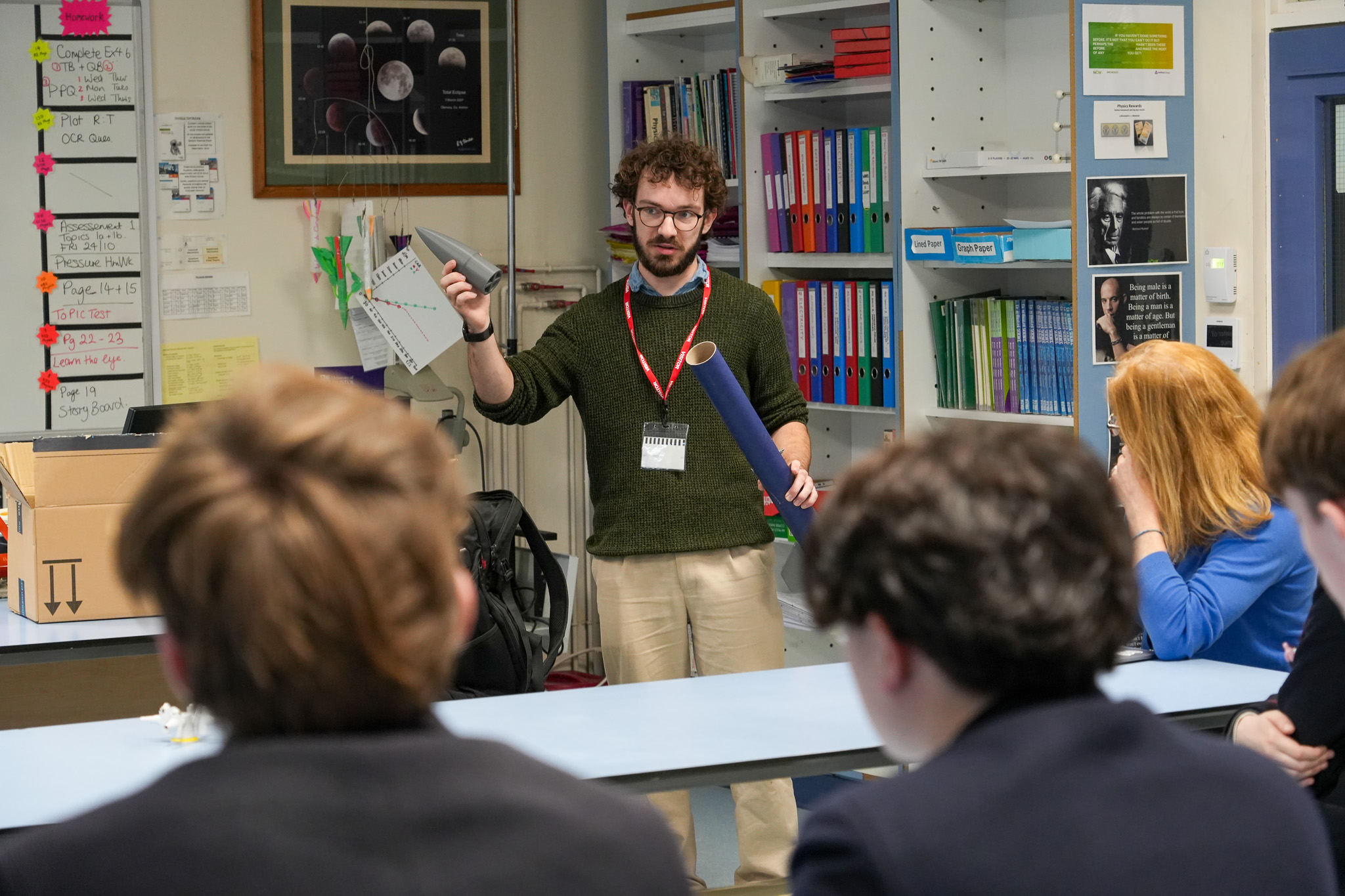
This was quite a task for a team who knew very little about rocketry back in September. From early concepts and rough calculations to practical construction and testing, the students rapidly developed both their technical understanding and their problem-solving abilities. Their journey reflected the essence of engineering: learning through trial, error and continuous refinement.
Luckily, they had the expert guidance of James Kavanagh-Cranston—a physicist, rocket enthusiast and engineering mind at Camlin Engineering—whose advice proved invaluable throughout the process. WHS is also deeply grateful for the support of two local companies, Warmflow and Pilgrims, alongside the WHS PTA, who generously sponsored the team’s substantial rocket construction costs.
When the moment arrived, the motor fired and she launched… as perfectly as Artemis. Reaching her apex, the rocket began her descent: the stage separation executed flawlessly, the parachute deployed, and the team ecstatically tracked her return to Earth. It was a moment of genuine success, as months of preparation came together in a few spectacular seconds.
Remarkably, the rocket achieved a soft landing on the grass, while many competitor rockets unfortunately struck the concrete runway. This alone was a testament to the team’s careful design and effective deployment system.
However, excitement briefly turned to concern as the team realised the altimeter had abandoned ship during flight and was lost somewhere across the massive expanse of concrete and grass. Without this device, their performance data—and therefore their final score—could have been compromised.
Thankfully, the team’s sharp young ears picked up the faint electronic beeps it was emitting, and after a tense search, the crucial data tracker was successfully recovered. Relief spread quickly among the students as they realised their efforts would be properly assessed.
Had they come close to the target height and time? Had the payload survived the journey
Inside the hangar, the rocket was meticulously dismantled and the egg revealed. Sadly, the cargo had not quite made it—in fact, it was rather obliterated. While disappointing, this outcome offered valuable insights into the structural and shock-absorption challenges involved in rocket design.
Despite the unfortunate fate of the egg, the competition proved to be a monumental learning experience and an incredibly worthwhile vehicle for following a technical brief, designing, building and testing a physical concept. The team demonstrated resilience, adaptability and a willingness to learn from every stage of the process.
Head of Physics, C Crozier, praised the team: “This group has demonstrated exceptional resilience, technical curiosity and teamwork throughout this project. To reach a regional final with such limited initial experience is a remarkable achievement. They have embraced every challenge, learned rapidly from setbacks, and represented Wallace High School with real determination and pride.”
For our future WHS engineers, this experience has laid a strong and invaluable foundation. Beyond the technical skills, the students gained confidence, collaboration experience and a deeper appreciation for applied physics and engineering principles.
Thank you to UKROC and their national sponsors for organising such an inspiring competition, and a massive congratulations to Friends’ School Lisburn (FSL), who took the regional title and will represent Northern Ireland at the UK finals in June. We wish them the very best of luck as they progress to the next stage.
As for WHS Rocketry, this is only the beginning. Armed with knowledge, experience and renewed determination, the team is already looking ahead. It is onward, upward and into 2027.
You can keep up to date with all the latest news from Wallace High School via http://www.instagram.com/wallacehighlisburn
Copyright © 2025. All rights reserved.